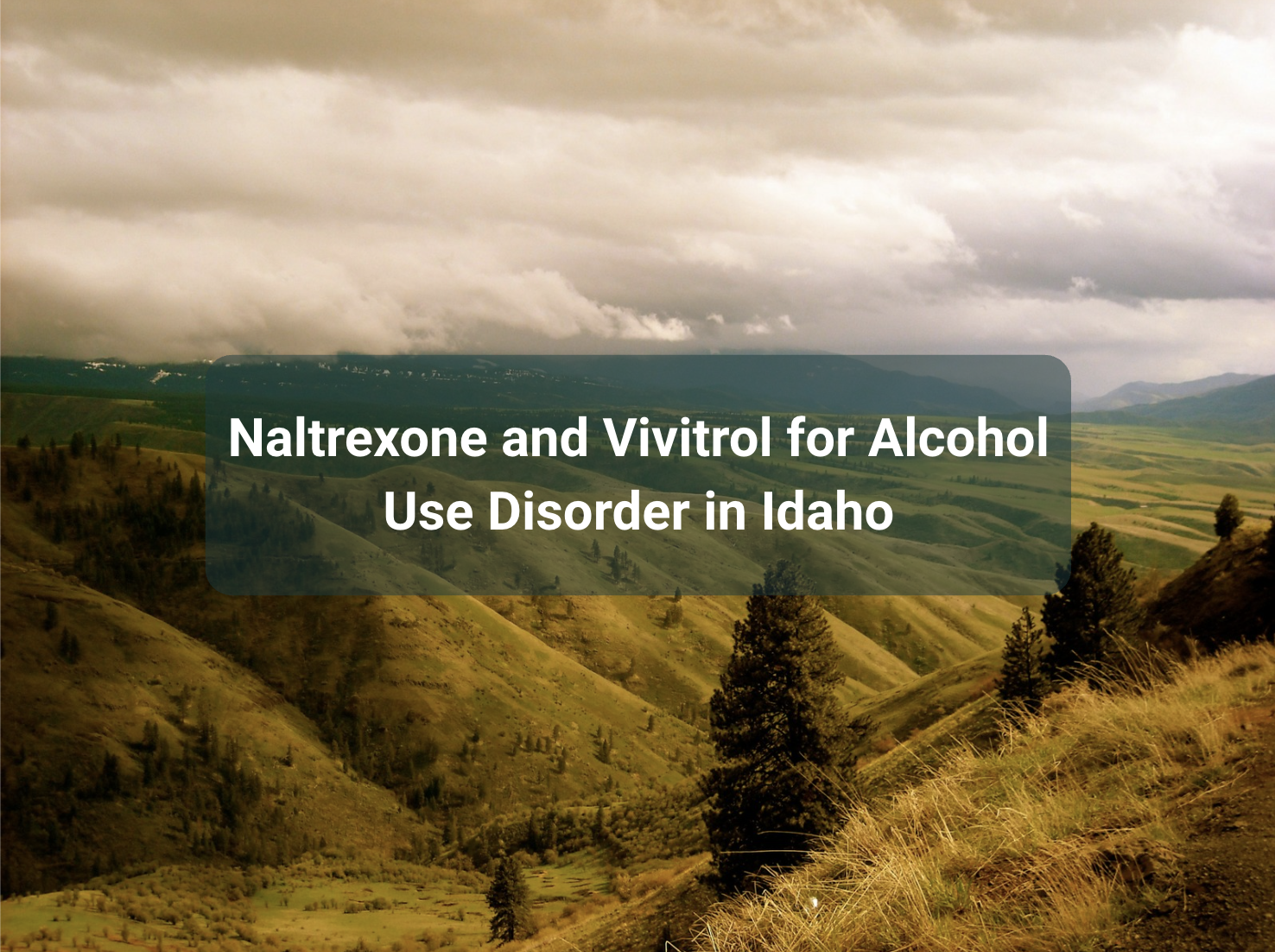



If you found this page, you are probably not doing casual research. Most people search for naltrexone when alcohol has started costing them something real: sleep, health, relationships, work, or the feeling that they are in control of their own life.
That is a serious place to be, and it deserves a straight answer.
Naltrexone is an FDA-approved medication for alcohol use disorder. It is not experimental, not a last resort, and not a sign that someone has hit rock bottom. It is a medical treatment, the same way blood pressure medication is a medical treatment.
This guide covers the practical questions that matter most if you are a Montana adult considering your options:
- What naltrexone actually does and how it works
- Who it may help, and when it is not the right fit
- The difference between the daily pill and the monthly injection (Vivitrol)
- How to get evaluated and access care through telehealth in Montana
- What to expect from insurance and cost
Nothing here is a prescription or a promise. But if you are ready to understand your options clearly, this is a good place to start.
What is naltrexone, exactly?
Naltrexone is a medication that works on the brain's opioid receptors, the same system that makes alcohol feel rewarding. It does not make you sick if you drink (that is a different medication called disulfiram). Instead, it reduces the reward signal, making drinking feel less compelling over time.
It has been FDA-approved for alcohol use disorder since 1994 and is supported by decades of clinical research. It is not a controlled substance, which means it does not carry the same prescribing restrictions as many other medications used in addiction care.
Naltrexone comes in two forms:
Oral naltrexone (pill): Taken daily, typically 50 mg. Requires consistent follow-through but is generally simpler to start and often has lower upfront cost.
Extended-release injectable naltrexone (Vivitrol): A monthly injection administered by a provider. Removes the daily decision entirely, which some people find helpful for staying on track.
Neither form requires you to commit to lifelong medication. Many people use naltrexone for a defined period while building other supports. The right form, and whether naltrexone makes sense at all, depends on your health history, goals, and what is realistic in your life.
That is exactly what a proper evaluation is for.
How does naltrexone help with drinking?
Think of it this way: for many people with alcohol use disorder, drinking is not just a habit. It is a loop. The brain anticipates the reward, the craving builds, and drinking feels like the only way to relieve it. Naltrexone interrupts that loop at the neurological level by blocking some of the reward signal that alcohol normally triggers.
Over time, that can change the pull. The drink that used to feel urgent starts to feel less necessary.
According to SAMHSA, naltrexone reduces cravings and the amount consumed. In clinical practice, what that looks like varies by person:
- Fewer heavy drinking days. Many people do not stop drinking immediately but find that the number of days they drink heavily drops significantly.
- Reduced craving intensity. The urge to drink does not disappear, but it becomes easier to pause and make a different choice.
- Shorter relapses. For people working toward abstinence, naltrexone can reduce how long a slip lasts before they get back on track.
Naltrexone is not a cure, and it works best as part of a broader care plan. But it gives the brain some breathing room, and for a lot of people, that breathing room is what makes the difference between another cycle of trying and failing and actually building something more stable.
The medication does not do the work for you. It makes the work more doable.
Who might be a good candidate for naltrexone?
Naltrexone is not for everyone, and the decision belongs in a clinical evaluation, not a web search. But it helps to know roughly who it is most commonly considered for.
SAMHSA's clinical guidance suggests considering naltrexone for adults who have a diagnosis of alcohol dependence or alcohol use disorder, particularly those who have stopped drinking but are experiencing cravings or repeated relapses. It may also be considered for people who are actively trying to reduce heavy drinking as a first step.
Signs a careful evaluation makes sense
You do not need to meet every item on this list. But if several of these describe your situation, naltrexone is worth discussing with a provider:
- You have tried to cut back or quit on your own and keep returning to the same pattern
- You are drinking heavily most days, or binge drinking regularly
- You have stopped before but relapsed, sometimes quickly
- You want to reduce drinking but are not sure abstinence is your immediate goal
- You are ready to try a structured approach with medical support
What a good evaluation covers
A real assessment is not just about whether you drink. It should include a review of your alcohol use pattern, other substance use, opioid exposure history, mental health, medical history, and what your goals actually are. That picture determines whether naltrexone is appropriate, which form fits your situation, and whether any safety steps need to happen first.
Candidacy is clinical. No checklist replaces that conversation.
When naltrexone is not the right choice, or needs extra caution
Being honest about limits is part of good care. Naltrexone is not appropriate for everyone, and some situations require additional steps before it can be considered safely.
Important: This section is not meant to discourage you from seeking help. It is meant to show you why a real evaluation matters, and why the safety questions are there to protect you, not to gatekeep treatment.
Tell your provider before starting naltrexone
- Current opioid use or recent opioid exposure. This is the most critical safety issue. Naltrexone blocks opioid receptors, and starting it too soon after opioid use can trigger sudden, severe withdrawal. SAMHSA guidelines recommend waiting at least 7 days after short-acting opioids and 10 to 14 days after long-acting opioids before starting naltrexone.
- Liver disease or hepatitis symptoms. Naltrexone is processed by the liver. Active hepatitis or significant liver impairment requires careful medical review. The SAMHSA pocket guide advises discontinuing naltrexone if signs or symptoms of acute hepatitis appear.
- Active heavy drinking at treatment start. Naltrexone has not been shown effective when someone is actively drinking at initiation. A provider will assess whether a period of stabilization or medically supervised withdrawal is needed first.
- Kidney concerns. Use with caution if there is moderate to severe renal impairment.
- Pregnancy. Discuss with your provider. Safety data in pregnancy is limited.
None of these are automatic disqualifiers. They are screening questions that a good evaluation will cover. If any apply to your situation, that is information your provider needs, not a reason to avoid the conversation.
Pill or shot: oral naltrexone vs. Vivitrol
Both forms are legitimate, evidence-based options. The choice between them is not about which is better in the abstract. It is about which fits your situation, your goals, and what is actually sustainable for you.
What this means practically
The daily pill is often the easier place to start, particularly for people who want to test how they respond to naltrexone before committing to a monthly injection. It also tends to involve less insurance friction upfront.
The monthly injection, Vivitrol, can be a strong option for people who find daily medication hard to maintain, or who want the structure of a once-a-month visit built into their care. Montana Medicaid requires documentation that oral naltrexone was considered and a rationale for why the injectable form is more appropriate.
Our psychiatric team prescribes both. We also work with pharmacies statewide in Montana, so if the injectable route is right for you, we can coordinate so you receive it conveniently, without a long drive.
Can you get naltrexone through telehealth in Montana?
Yes. And for a lot of Montana adults, telehealth is not a convenience feature. It is the difference between getting evaluated this month and putting it off for another six.
Montana law requires that telehealth care meet the same standard of care as in-person treatment. Montana Medicaid reimburses medically necessary telehealth services, including substance use disorder care. That means a telehealth evaluation for alcohol use disorder is not a lesser version of care. It is just care, delivered where you are.
Why telehealth matters specifically for AUD
Privacy is a real concern in small communities. If you live in a town where everyone knows your truck, walking into an addiction clinic is a public statement. A telehealth visit from your kitchen table is not.
Distance is the other factor. The nearest addiction psychiatry provider may be two or three hours away. A telehealth visit removes that barrier entirely, including the follow-up appointments that matter just as much as the first one.
What telehealth does not replace
A telehealth evaluation still needs to cover withdrawal risk, opioid history, liver concerns, and your full medical picture. If your situation requires a higher level of care, medically supervised detox, or in-person coordination, a good telehealth provider will tell you that directly and help connect you to the right resource.
Telehealth is a legitimate access point. It is not a shortcut around the safety steps that make treatment work.
What does the evaluation and follow-up process look like?
One of the things that keeps people from scheduling is not knowing what they are walking into. Here is what a careful evaluation for naltrexone typically involves.
The initial evaluation
- Alcohol use history. How long, how much, how often, and what patterns have you noticed.
- Withdrawal risk assessment. Whether you have had withdrawal symptoms before, including shakes, sweating, or seizures. This determines whether any stabilization is needed before starting medication.
- Opioid exposure history. Current or recent opioid use is the most important safety screen before naltrexone is considered.
- Medical history. Liver function, kidney health, and any other conditions that affect prescribing decisions.
- Mental health review. Depression, anxiety, and trauma frequently co-occur with alcohol use disorder. A good evaluation covers these, not just the drinking.
- Goals and preferences. Abstinence, reduction, or somewhere in between. There is no single right answer.
After the evaluation
If medication is appropriate, follow-up visits matter. Side effects, progress, and whether the medication is actually helping all get reviewed and adjusted over time. SAMHSA's clinical guidance recommends integrating medication with counseling and mutual-help supports when available, though the specific path depends on what works for you.
The evaluation is not a commitment to any particular outcome. It is a conversation where you get honest information and make a decision together with your provider.
What about cost and insurance in Montana?
Cost is one of the most common reasons people delay getting help, and it deserves a straight answer even when the answer is "it depends."
Honest caveat: Out-of-pocket cost varies significantly based on your insurance, which medication form is prescribed, your pharmacy, and whether prior authorization is required. We cannot quote you a price here. What we can do is tell you what questions to ask.
Oral naltrexone is generally the more straightforward coverage situation. It is an established generic medication and is often covered with a standard copay under most insurance plans.
Extended-release injectable naltrexone (Vivitrol) typically involves more steps. Montana Medicaid requires prior authorization, including documentation that oral naltrexone was considered and a clinical rationale for why the injectable is more appropriate.
Frontier accepts Medicare, Medicaid, TRICARE, and many commercial insurance plans. Before your visit, it is worth calling your insurance to ask:
- Is naltrexone (oral or injectable) covered under my plan?
- Is a prior authorization required?
- What is my copay or cost-sharing for a telehealth psychiatric visit?
- Is Frontier Psychiatry in-network?
Starting the conversation with us is also a reasonable first step. We can help clarify what to expect before you commit to anything.
Key takeaways for Montana adults considering naltrexone
- Naltrexone is a mainstream, evidence-based treatment for AUD. It is FDA-approved, not experimental, and has been used clinically for decades.
- It comes in two forms: a daily pill and a monthly injection (Vivitrol). The right choice depends on your goals, medical history, and what is realistic for your life.
- Opioid history and liver health are the most important safety questions. A careful evaluation will cover both before any prescribing decision is made.
- Telehealth makes evaluation and follow-up realistic for most Montana adults, including people in rural areas who want privacy or cannot easily travel.
- The next step is a conversation, not a commitment. Scheduling an evaluation does not lock you into any medication, any formulation, or any particular treatment path.
How to get started without overcommitting yourself
Scheduling an evaluation does not mean you are agreeing to take medication. It means you are getting a real clinical picture of your situation, understanding your options, and asking the questions you need to ask.
That visit is the place to be honest about your drinking, your history, your concerns about side effects, and what you are actually hoping to change. A good provider will not push you toward a specific outcome. They will help you figure out what makes sense.
For Montana adults who want help without a long drive, a long wait, or a room full of strangers, telepsychiatry makes that first step much more realistic.
If you are ready to talk to someone, schedule an addiction evaluation with Frontier's psychiatric team. We see patients across all 56 Montana counties, accept most major insurance, and do not require a referral.
You do not have to have everything figured out before you call. That is what the evaluation is for.