



Key Takeaways
The short answer: Psychiatrists are medical doctors who prescribe medication. Psychologists are doctoral-level therapists who provide talk therapy. Many patients benefit from seeing both.
- Psychiatrists hold MD or DO degrees, prescribe medication, and rule out medical causes of mental health symptoms
- Psychologists hold PhD or PsyD degrees, provide therapy, and conduct psychological testing
- In Alaska, Idaho, and Montana, telehealth has become essential due to severe provider shortages
- Research shows combining medication with therapy is more effective than either treatment alone for many conditions
Deciding to seek help for your mental health is a major step. But once you make that choice, another question immediately follows: should you see a psychiatrist or a psychologist? These titles sound similar, but they represent distinct professions with different training and treatment approaches.
This distinction matters even more if you live in Alaska, Idaho, or Montana, where mental health provider shortages can mean long wait times. Knowing which type of provider you need helps you avoid wasted time and delayed treatment. Here's a clear breakdown to help you make the right choice.
What Is a Psychiatrist?
A psychiatrist is a medical doctor who specializes in mental health. They complete medical school and earn either an MD or DO degree, just like a cardiologist or pediatrician. After medical school, psychiatrists complete a four-year residency focused on diagnosing and treating mental health conditions. Some pursue additional fellowship training in specialized areas such as child and adolescent psychiatry, addiction psychiatry, or geriatric psychiatry.
Because psychiatrists are physicians, they approach mental health through a biological lens. Their years of medical training and subsequent psychiatry clinical training give them deep understanding of the bio-psycho-social roots of mental illness and substance use disorders, meaning they consider biological, psychological, and social factors when diagnosing and treating patients.
Psychiatrists receive extensive training in talk therapy during their residency. Historically, many psychiatrists provided both therapy and medication management. However, the severe shortage of psychiatrists, especially in rural areas, has shifted practice patterns. Today, psychiatrists are more likely to focus on medication management while collaborating with therapists who provide ongoing psychotherapy.
Psychiatrists have the authority to prescribe medications, order laboratory tests, and evaluate physical health problems that might cause or worsen mental health symptoms. For example, thyroid disorders can mimic depression, and hormonal imbalances can trigger anxiety. A psychiatrist can order blood work to rule out these medical causes before starting treatment.
Psychiatrists treat conditions including depression, anxiety disorders, bipolar disorder, schizophrenia, PTSD, OCD, eating disorders, and substance use disorders. They can also provide emergency psychiatric evaluations and coordinate care for patients who need hospitalization.
What Is a Psychologist?
A psychologist is a mental health professional who holds a doctoral degree in psychology: either a PhD (Doctor of Philosophy) or PsyD (Doctor of Psychology). They are highly trained experts in human behavior, emotions, and thought patterns, but they are not medical doctors.
Psychologists specialize in psychotherapy, commonly called talk therapy. They help you understand why you think, feel, and behave in certain ways. Through structured therapeutic conversations, they teach coping strategies and use evidence-based techniques like Cognitive Behavioral Therapy (CBT), Dialectical Behavior Therapy (DBT), and exposure therapy for treating phobias and anxiety.
Psychologists also conduct comprehensive psychological testing to diagnose conditions like ADHD, autism spectrum disorder, learning disabilities, and personality disorders. The results help guide treatment planning and can support requests for accommodations at school or work. In most states, including Alaska, Idaho, and Montana, psychologists cannot prescribe medication. However, their specialized training in therapeutic techniques often makes them the preferred choice for treating trauma, relationship issues, grief, and behavioral problems.
Key Differences Between Psychiatrists and Psychologists
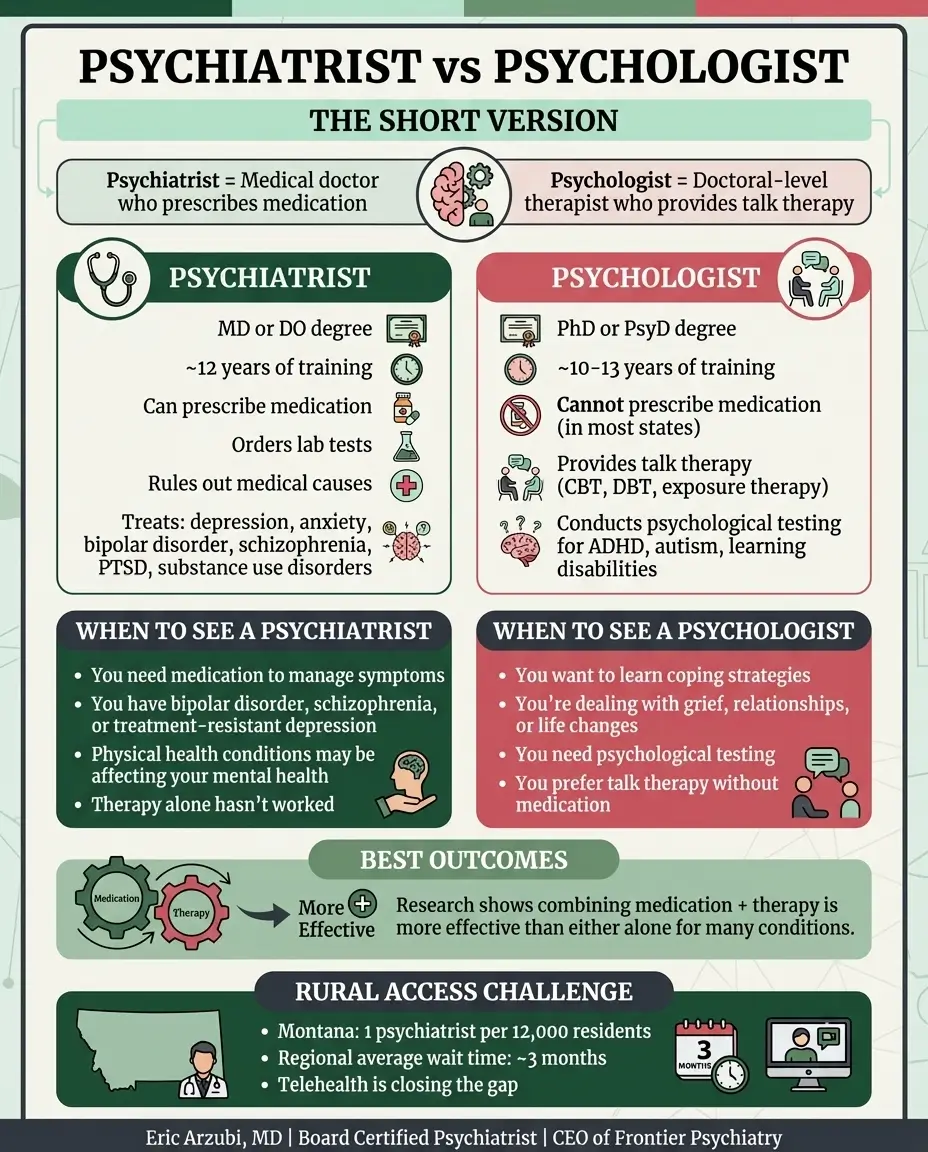
The simplest way to understand the difference: psychiatrists treat the biological aspects of mental health (brain chemistry and medication), while psychologists treat the behavioral and emotional aspects (thoughts, feelings, and coping skills).
Training and Credentials
Both psychiatrists and psychologists invest over a decade in education, but their training paths differ significantly.
Psychiatrist training includes: four years of undergraduate education, four years of medical school, and four years of psychiatry residency. That is approximately 12 years total.
Psychologist training includes: four years of undergraduate education, five to seven years in a doctoral program, and one to two years of supervised clinical experience. That is approximately 10 to 13 years total.
How Do Psychiatrists and Psychologists Treat Mental Health Conditions?
Psychiatrists are trained to first rule out medical or organic causes of behavioral health symptoms. Conditions like thyroid disorders, autoimmune diseases, and neurological problems can all cause psychiatric symptoms. Once medical causes are addressed or ruled out, psychiatrists focus on medication management, prescribing antidepressants, mood stabilizers, anti-anxiety medications, and antipsychotics as needed.
Some psychiatrists offer brief 15-minute medication check appointments, but this rushed approach doesn't serve patients well. At Frontier Psychiatry, we keep appointments to a minimum of 30 minutes because we don't believe mental health care should be rushed.
Psychologists focus on psychotherapy. Sessions typically last 45 to 60 minutes. They use evidence-based methods like Cognitive Behavioral Therapy to help you identify and change harmful thought patterns. If you want to work through trauma, relationship issues, or life transitions without medication, a psychologist is the right choice.
Do Psychiatrists and Psychologists Work Together?
Yes, and this collaboration often produces the best outcomes. For conditions like major depression, bipolar disorder, or severe anxiety, research shows that combining medication with therapy is more effective than either treatment alone. In an integrated care model, a psychiatrist manages medication to stabilize symptoms while a psychologist provides ongoing therapy. This team approach addresses both the biological and psychological aspects of mental health.
When Should You See a Psychiatrist vs a Psychologist?
Consider seeing a psychiatrist if:
- You believe you need medication to manage daily symptoms
- You have a complex condition like schizophrenia, bipolar disorder, or treatment-resistant depression
- You have physical health conditions that might affect your mental health
- Previous therapy alone has not been effective
Consider seeing a psychologist if:
- You want to learn coping strategies for stress, anxiety, or depression
- You are dealing with grief, relationship problems, or major life changes
- You need psychological testing for ADHD, autism, or learning disabilities
- You prefer talk therapy without medication
Finding Mental Health Care in Alaska, Idaho, and Montana
Access to mental health care presents unique challenges across the rural West. All three states face significant provider shortages for both psychiatrists and psychologists. Mental health professionals of all types are difficult to find outside major cities, and wait times can stretch for months. Understanding these challenges can help you plan your path to care.
Mental Health Care in Alaska
Alaska has one of the lowest mental health provider-to-population ratios in the nation. Most psychiatrists and psychologists practice in Anchorage, leaving rural communities, including much of the Bush and Southeast Alaska, with extremely limited options. The state's vast geography, scattered population, and harsh weather make in-person appointments difficult for many residents. Telehealth has become essential for Alaskans seeking mental health care, and Alaska Medicaid covers telehealth mental health services.
Mental Health Care in Idaho
Idaho faces a significant mental health workforce shortage across the state. While Boise has the highest concentration of providers, residents in rural areas like the Idaho Panhandle, Magic Valley, and Eastern Idaho often wait months for appointments. Many Idaho counties have few or no psychiatrists or psychologists, forcing residents to travel hours or rely on telehealth. Idaho Medicaid covers both in-person and telehealth mental health services.
Mental Health Care in Montana
Montana has approximately one psychiatrist for every 12,000 residents, well below the national average, and psychologists are similarly scarce outside urban areas. Major medical centers in Billings, Missoula, and Great Falls serve as regional hubs, but residents in smaller communities face long drives and extended wait times. Telehealth has expanded dramatically, bringing psychiatric and psychological care to patients across Big Sky Country.
How Telehealth Is Expanding Mental Health Access
Telehealth has transformed mental health care delivery in rural states. Virtual appointments eliminate long drives, time off work, and childcare arrangements. For patients in Alaska, Idaho, and Montana, telehealth means accessing specialists who would otherwise be hours away. This is especially important during winter months when travel can be dangerous.
Many telehealth platforms offer same-week appointments, reducing the weeks-long waits common for in-person psychiatrists. Services like Frontier Psychiatry bring board-certified psychiatrists directly to patients' homes across Alaska, Idaho, and Montana, allowing residents of remote communities to access the same quality of care available in major cities. Frontier Psychiatry's average wait time for new patients is less than 30 days, compared to the regional average of about three months. Frontier serves all 56 of Montana's counties and is on track to deliver 100% geographic coverage in Alaska and Idaho as well.
What Do Psychiatrists and Psychologists Cost?
Most major insurance plans cover both psychiatrists and psychologists, making mental health care accessible to many patients. Medicaid programs in Alaska, Idaho, and Montana cover both types of providers for eligible residents, often with minimal copays of just $3 to $10 per visit.
Your copay may differ between provider types because psychiatrists are often classified as specialists. Before booking an appointment, verify your insurance coverage, check whether the provider is in-network, and ask about your expected copay. If you need a referral from your primary care doctor, get that in place first.
For those paying out of pocket, costs vary by location and provider experience. Initial psychiatric evaluations may range from $200 to $500, with follow-up appointments costing less. Psychologists generally charge $100 to $250 per therapy session. Many providers offer sliding scale fees based on income, and community mental health centers often provide services at reduced rates.
Questions to Ask When Choosing a Mental Health Provider
- Do you coordinate care with other healthcare providers?
- What is your approach to medication versus therapy?
- How long is the wait for new patient appointments?
- Do you offer telehealth appointments?
- What insurance plans do you accept?
Common Mistakes to Avoid When Seeking Mental Health Care
- Assuming medication is a quick fix. Psychiatric medications can stabilize symptoms, but they rarely address underlying behavioral patterns. Many people benefit from combining medication with therapy.
- Ignoring brain chemistry. If you have been in therapy for years without significant progress, a psychiatric evaluation might reveal that your brain chemistry needs attention.
- Giving up after one provider. Finding the right mental health provider is personal. It is normal to try several before finding the right fit.
- Waiting too long to seek help. Mental health conditions often worsen without treatment. Early intervention leads to better outcomes.
Choosing the Right Provider for Your Mental Health
The difference between a psychiatrist and a psychologist comes down to training and treatment approach. Psychiatrists are medical doctors who address the biological aspects of mental health, including ruling out medical causes and prescribing medication. Psychologists are doctoral-level experts who use therapy to address thoughts, emotions, and behaviors. Neither is better than the other. They simply do different jobs, and for many people, the most effective treatment involves both.
If you live in Alaska, Idaho, or Montana and are unsure where to start, reach out to Frontier Psychiatry. Our care team can assess your situation and guide you to the right provider for your needs.
Frequently Asked Questions
Can psychologists prescribe medication in Alaska, Idaho, or Montana?
No. Psychologists cannot prescribe medication in Alaska, Idaho, or Montana. Only psychiatrists and other prescribing providers have this authority in these states.
How long are wait times for psychiatrists in rural areas?
Wait times for psychiatrists in rural areas typically range from two to three months. Telehealth services often have shorter wait times because they connect you with providers across a wider area. For example, Frontier Psychiatry's average wait time is less than 30 days.
Does Medicaid cover psychiatrists and psychologists?
Yes. Medicaid programs in Alaska, Idaho, and Montana cover both psychiatrists and psychologists, with copays typically $3 to $10 per visit.
What psychological testing do psychologists provide?
Psychologists conduct assessments for ADHD, autism, learning disabilities, and personality disorders. These test results guide treatment planning and can support accommodation requests at school or work.
Is telehealth as effective as in-person mental health care?
Yes. Research shows telehealth mental health services are equally effective for most conditions while improving access for patients in rural areas.
What is the difference between a psychiatrist and a therapist?
A psychiatrist is a medical doctor who can prescribe medication and diagnose mental health conditions. A therapist (which may include psychologists, licensed clinical social workers, or counselors) provides talk therapy but typically cannot prescribe medication.
Should I see a psychiatrist or psychologist for anxiety?
It depends on the severity of your symptoms. For mild to moderate anxiety, a psychologist can teach coping strategies through therapy. For severe anxiety that interferes with daily life, a psychiatrist can evaluate whether medication might help. Many people benefit from seeing both.
Should I see a psychiatrist or psychologist for depression?
For depression, the answer often depends on symptom severity. Mild depression may respond well to therapy alone with a psychologist. Moderate to severe depression often benefits from a combination of medication (from a psychiatrist) and therapy (from a psychologist).
About Frontier Psychiatry
Frontier Psychiatry is a telehealth behavioral health platform serving patients across Montana, Idaho, and Alaska. Our team of board-certified psychiatrists and psychiatric nurse practitioners treats depression, anxiety, bipolar disorder, ADHD, PTSD, substance use disorders, and other conditions via secure video appointments.
Our research, published in JAMA Network Open, demonstrates significantly lower hospitalization rates and fewer emergency room visits compared to standard care. In an October 2025 patient survey, 81% of patients said they are likely or very likely to recommend Frontier Psychiatry to a loved one in need. We keep appointments to a minimum of 30 minutes because quality care takes time. We accept most major insurance plans including Medicaid.
Ready to get started? Request an appointment at frontier.care or call our care coordination team.