

How to See a Psychiatrist in Idaho Without a Referral
By Eric Arzubi, MD, Assistant Clinical Professor at the Yale School of Medicine; CEO and Co-Founder of Frontier Psychiatry
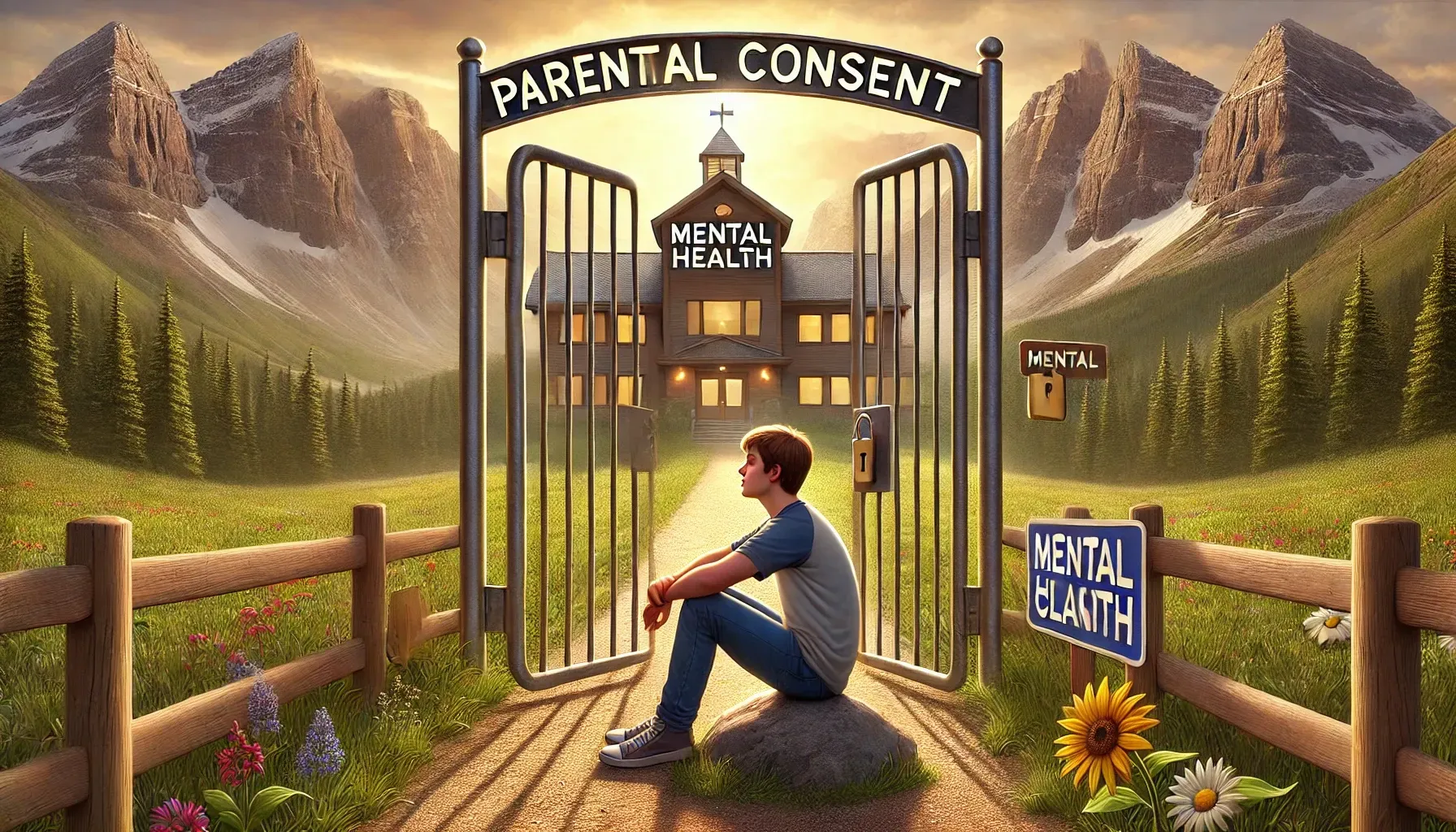
If you've been putting off getting psychiatric care in Idaho because you thought you needed a referral first, you don't. You can book directly with a psychiatric provider. No primary care gatekeeper. No waiting months for a slot at a clinic two hours away.
I know that's not how most people assume it works. The mental health system in Idaho is hard to navigate. And the assumption that you need a referral is one of the most common reasons people put off getting help. Let me clear that up right at the start, then walk you through how to actually get care.
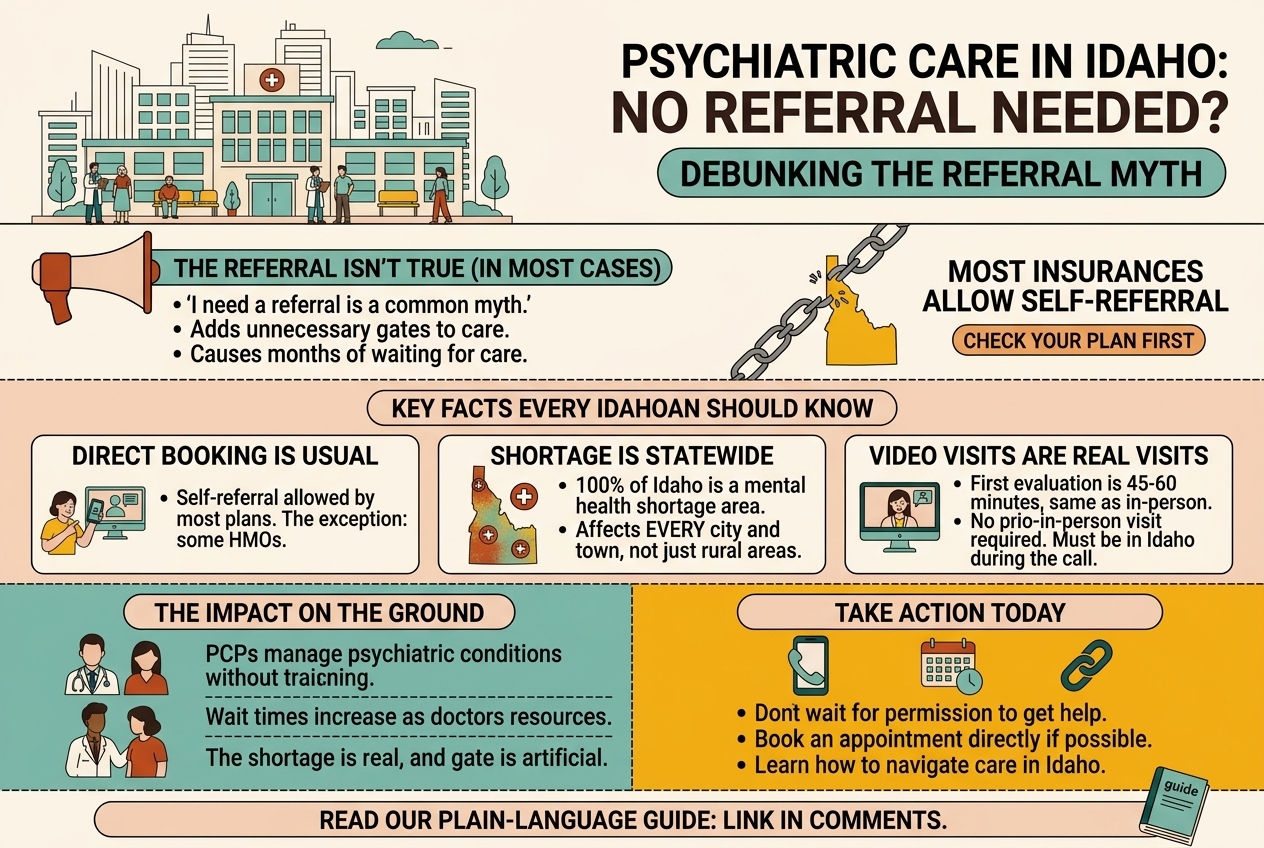
The short version: Idaho has a severe psychiatrist shortage. The entire state — 100% of its land area and population — is federally designated as a Mental Health Professional Shortage Area. That means the traditional model of "see your PCP, get a referral, wait for an appointment" often just doesn't work here. Telepsychiatry does. And you can start without asking anyone's permission.
Key Takeaways
- No referral is required to see a psychiatrist or psychiatric provider in Idaho, in person or by telehealth
- 100% of Idaho is a federally designated Mental Health Professional Shortage Area — the shortage is statewide, not just rural
- Most major insurance plans cover telepsychiatry, including Idaho Medicaid, Medicare, BCBS, Regence, PacificSource, and SelectHealth
- A first psychiatric evaluation by video takes 45 to 60 minutes and covers the same ground as an in-person visit
- Frontier Psychiatry is licensed in Idaho and sees patients statewide, with most new patients seen within 14 days
Why Idaho Is Different From Most States
Most states have pockets of psychiatrist shortages — rural counties where providers are thin and waits are long. Idaho doesn't have pockets. It has a statewide shortage.
According to the federal Health Resources and Services Administration (HRSA), 100% of Idaho's land area and population falls within a Mental Health Health Professional Shortage Area (HPSA). That's not a statistic about one rural county. It means the shortage is everywhere — Twin Falls, Coeur d'Alene, Nampa, Pocatello, and every smaller community in between.
A 2025 study published in PMC asked rural Idaho primary care providers about their biggest challenges. The top three: getting patients access to services, managing complex cases, and working with limited resources. Many said they were handling mental health conditions they weren't trained for. Not because they wanted to. Because no one else was available.
What this means for you practically
- Your primary care doctor may be managing your mental health needs not because that's best, but because there's no one else available
- Referrals to in-person psychiatrists in Idaho can take months — if a local psychiatrist is even accepting new patients
- The federal government has been aware of this gap for years. Idaho's 2026 Rural Health Transformation Program allocates $75 million toward behavioral health. That includes funding for a new pediatric psychiatry access line
The good news: telepsychiatry sidesteps most of these barriers entirely. A psychiatric provider licensed in Idaho can evaluate you, diagnose you, and prescribe medication by secure video. That includes psychiatrists, nurse practitioners, and physician assistants. It doesn't matter where in the state you live.
Do You Actually Need a Referral to See a Psychiatrist in Idaho?
No. Idaho does not require a referral to see a psychiatric provider, whether in person or by telehealth.
This surprises a lot of people because it's different from how specialist care typically works. With cardiologists or orthopedic surgeons, your insurance often requires a primary care referral before they'll cover the visit. Psychiatric care is different. Most major insurance plans allow you to self-refer directly. That includes Blue Cross Blue Shield of Idaho, Regence, PacificSource, UnitedHealthcare, and Medicare.
The one exception worth knowing: some HMO plans (not PPO) may require a referral for specialist visits as part of their network structure. If you're on an HMO plan, check your member handbook or call the number on your insurance card before booking. But if you're on a PPO, you almost certainly don't need one.
The same applies to telepsychiatry. Idaho law permits psychiatric providers to evaluate and treat patients via secure video without a prior in-person visit. You don't need to establish care in person first.
What you do need
- An Idaho address (you must be physically located in Idaho during the appointment)
- A device with a camera and a stable internet connection
- Your insurance card and a list of current medications
- About 45 to 60 minutes for your first evaluation
That's it. No referral letter, no PCP sign-off, no prior authorization in most cases.
What Telepsychiatry in Idaho Actually Looks Like
A lot of people picture a video appointment as a rushed 10-minute call. It's not. Your first visit runs 45 to 60 minutes. That's the same length as an in-person evaluation, because the provider needs the same information either way.
The most common thing I hear from new patients in Idaho is: "I didn't think it would feel this real." They expected something quick and transactional. What they got was a real conversation. Someone who had read their intake forms. Asked follow-up questions. Actually had time for them. That's what a proper first visit looks like, whether it's in an office or over video.
Here's what the process looks like from start to finish:
- Book online or by phone. No referral needed. You fill out intake forms covering your symptoms, mental health history, current medications, and what you're hoping to address.
- Your first appointment is a full evaluation. Your provider will ask about your symptoms, your personal and family history, your sleep, your work, your relationships. Everything relevant to understanding what's going on and what would help.
- You and your provider make a plan together. That might mean medication, therapy referrals, lifestyle recommendations, or some combination. If medication is appropriate, the prescription goes electronically to your pharmacy.
- Follow-up visits are shorter. Once you're established, check-ins typically run 20 to 30 minutes and focus on how things are going, whether adjustments are needed, and any new concerns.
What conditions telepsychiatry handles well
Telepsychiatry is well suited for most common psychiatric conditions, including:
What it doesn't replace: telepsychiatry isn't the right fit for psychiatric emergencies or situations requiring hands-on medical evaluation. If you're in crisis, call 988 or go to your nearest emergency room.
Does Insurance Cover Telepsychiatry in Idaho?
In most cases, yes. Idaho law requires private insurers to cover telehealth services. That includes mental health and psychiatric care.
Plans that typically cover telepsychiatry in Idaho:
- Blue Cross Blue Shield of Idaho
- Regence BlueShield of Idaho
- PacificSource Health Plans
- SelectHealth
- UnitedHealthcare
- Aetna
- Cigna
- Medicare (Part B covers outpatient mental health services by telehealth)
- Idaho Medicaid (covers behavioral health services delivered by telehealth under state statute)
A few things to confirm before your first appointment
Coverage rules vary by plan, so it's worth a quick check:
- Is the provider in-network? Out-of-network telepsychiatry may still be covered but at a higher cost share.
- Is there a deductible to meet first? Mental health visits typically count toward your medical deductible.
- Does your plan require prior authorization for psychiatric care? Most don't, but some plans do for ongoing medication management.
The simplest approach: call the number on the back of your insurance card. Ask: "Is telepsychiatry covered under my plan? Do I need a referral or prior authorization?" That one call answers everything. You can also check your insurance eligibility on the Frontier Psychiatry website.
If you're uninsured or underinsured: some telepsychiatry practices offer self-pay rates. It's worth asking directly, as cash-pay pricing is often more accessible than people expect.
How to Book a Telepsychiatry Appointment in Idaho
The process is straightforward. Here's what to do:
- Find a psychiatric provider licensed in Idaho who offers telepsychiatry and accepts your insurance. That includes psychiatrists, psychiatric nurse practitioners, and physician assistants. They don't need to be physically located in Idaho. They just need to hold an active Idaho license.
- Request an appointment online or by phone. Most practices have an intake form on their website. You'll share your insurance information, a brief description of what you're seeking help with, and your availability.
- Complete your intake paperwork. This usually arrives by email before your appointment: symptom questionnaires, consent forms, and a medical history form. Fill them out before your visit. It makes the appointment itself more efficient and gives your provider more time to focus on you.
- Show up to your video visit. Find a private, quiet space with a reliable internet connection. Your phone, tablet, or laptop all work.
- Follow up as recommended. After your evaluation, your provider will suggest a follow-up schedule. Sticking to it is how you get the most out of care.
At Frontier Psychiatry, we're licensed in Idaho and see patients across the entire state. If you're in Boise or Nampa, we can see you. If you're in Twin Falls, Pocatello, Coeur d'Alene, or a smaller community without a local psychiatrist, we can see you too. We accept most major Idaho insurance plans, and most new patients are seen within 14 days. No referral needed to get started.
Schedule a new patient appointment with Frontier Psychiatry
The Bottom Line
Idaho's mental health system is under-resourced. That's not going to change overnight, even with the federal investment coming through the Rural Health Transformation Program. But the shortage doesn't have to be your problem to solve before you get care.
You don't need a referral. You don't need to live near a city. You don't need to wait for the system to catch up.
You need a private space, a device with a camera, and about an hour. That's the real barrier to psychiatric care in Idaho right now — and it's one most people can clear today.
If you've been thinking about it, this is the nudge. Book a new patient appointment with Frontier Psychiatry and see a board-certified psychiatrist from wherever you are in Idaho.